Teach It to Learn It: Why Your Child Should Become the Teacher
By Historical Conquest LLC · October 6, 2026
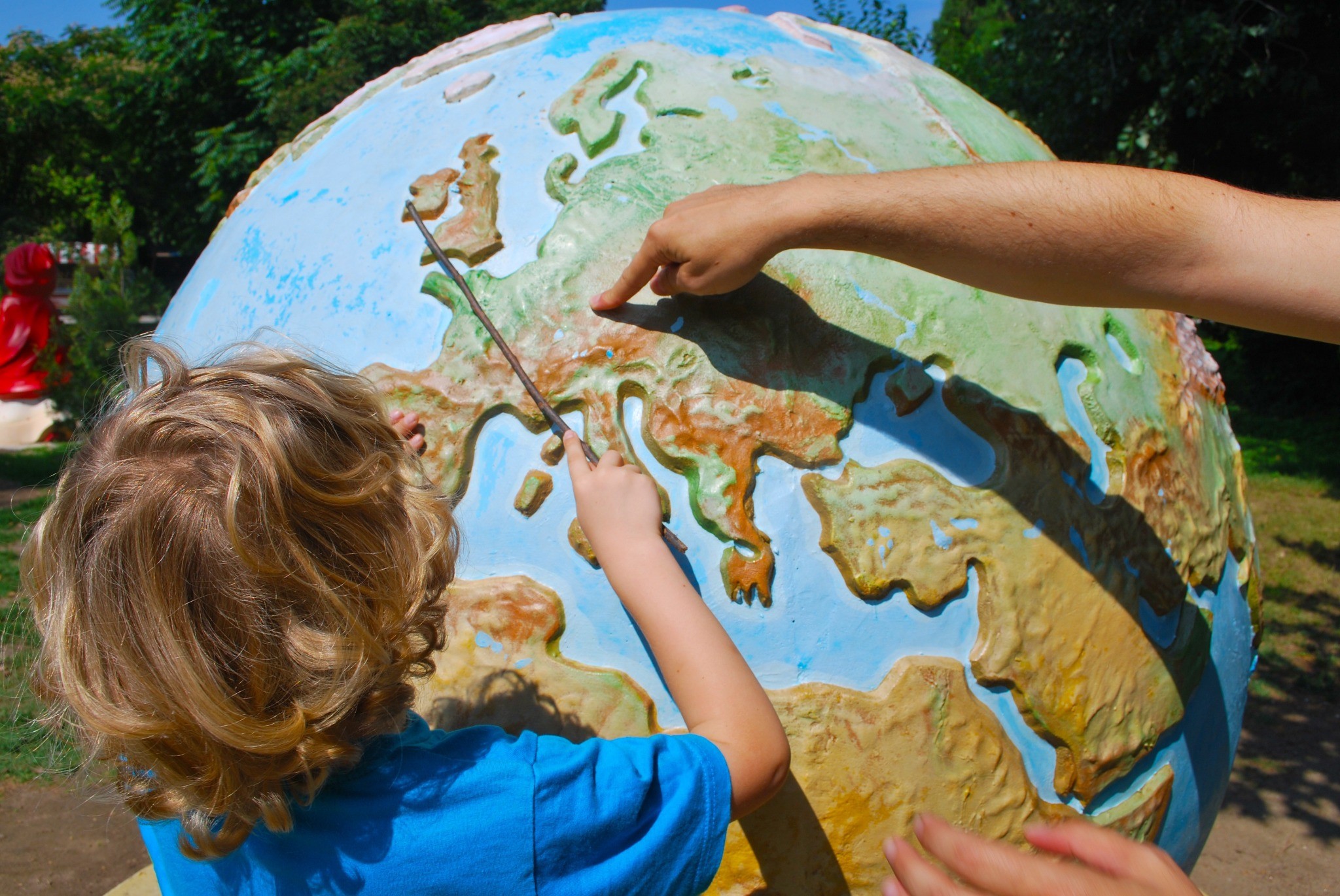
Want Your Child to Remember It? Make Them Explain It
Here is a simple question every homeschooling parent should consider: after your child finishes a lesson, who does most of the talking—you or your child?
Because if you're doing all the talking, there may be a problem.
For generations, education has often followed a familiar formula. The teacher talks. The student listens. The student takes notes. Everybody hopes something sticks. Then comes the test. A few weeks later, much of the information has disappeared.
There is a better approach. Make the student teach.
When children know they will have to explain something, defend an idea, answer questions, or demonstrate how something works, they cannot simply let information wash over them. They have to organize it. They have to determine what matters. Most importantly, they have to retrieve it.
That's where learning gets interesting.
I Discovered This Through Historical Conquest
I didn't learn this principle from a textbook. I experienced it.
When I was younger, history wasn't exactly my favorite subject. Then, in college, I took a one-page English assignment and turned it into a project that eventually became Historical Conquest, a history-based card game.
Suddenly, history had a purpose. If I wanted to create a card about a historical figure, civilization, battle, invention, or event, I needed to understand it. I wasn't just memorizing information for a test anymore. I was using it to build something.
But another transformation happened when I began teaching Historical Conquest lessons.
Now I wasn't merely learning history so I could create a game. I had to understand it well enough to explain it to somebody else.
That changed everything.
If I was going to stand in front of students and teach a historical subject, I needed to know how the pieces fit together. Why did this war happen? What motivated this person? What happened before the event? What changed afterward? If a student asked a question, could I answer it?
I became far more versed in history, and I found myself retaining much more of what I studied. My brain wasn't treating the information as something disposable. I knew I was going to need it again.
That is exactly the kind of experience we can create for our children.

The Science Behind Becoming the Teacher
Researchers have studied what is sometimes called the protégé effect—the idea that preparing to teach or actually teaching material can improve the teacher's own learning. Studies have found benefits when learners expect to teach material and when they explain material to others, although the size of the benefit depends on how the activity is structured.
Why might it work? Because teaching forces students to do things passive listening often doesn't.
They have to retrieve information from memory, organize it into a logical sequence, explain relationships, recognize what they don't understand, and respond to questions.
That last part is important.
Tell a child, "Do you understand?" and you'll frequently hear, "Yep."
Then say, "Great. Teach it to me."
Things get interesting very quickly.
If your student can explain photosynthesis in their own words, answer your questions, draw the process, and explain why plants need sunlight, you have much better evidence of understanding than a simple "yes."
The Problem with the Endless Lecture
Lectures aren't useless. A knowledgeable teacher can introduce ideas, tell stories, explain difficult concepts, and inspire students. But listening alone is a relatively passive activity, and relying heavily on lecture can leave students with too few opportunities to retrieve and apply what they heard.
Active-learning research provides good reason to get students involved. A major meta-analysis of 225 studies in undergraduate STEM education found that students in active-learning environments performed better on examinations and concept inventories than students taught through traditional lecturing, while students in traditional lecture classes were more likely to fail.
The lesson for homeschooling families isn't "Never lecture."
It's "Don't stop there."
Instead of talking to your student for 45 minutes, teach for ten or fifteen minutes and then turn the conversation over to them.
Better yet, occasionally reverse the entire classroom.
Try the Dinner-Table Classroom
Here's an experiment you can try this week. Give your student something appropriate to read, watch, investigate, or research beforehand. The next day, tell them:
"You're teaching today."
You become the student.
Ask questions. Challenge assumptions. Occasionally pretend you don't understand. Ask for examples. Have siblings participate. Let the student use a whiteboard, maps, drawings, objects, slides, costumes, experiments—whatever helps them communicate the idea.
For example:
- History: "Teach us why the American Revolution happened."
- Science: "Show us why volcanoes erupt."
- Math: "Teach me how to calculate a 25% discount."
- Literature: "Convince me that this character made the wrong decision."
- Personal Finance: "Explain why borrowing $5,000 can cost considerably more than $5,000."
Then have a discussion.
Don't immediately correct every mistake. Ask questions that force the student to reconsider the answer. "Why do you think that?" "What evidence supports it?" "What would happen if that changed?"
Now your child isn't sitting through education.
They're participating in it.
Discussion Changes the Classroom
This is one of the tremendous advantages homeschooling families have. You don't necessarily need a classroom with thirty desks and a teacher standing at the front. Your classroom might be the kitchen table.
Use that advantage.
Have students read about tomorrow's subject beforehand. Then spend less time repeating what they alr
eady read and more time discussing it. Let the student explain what happened. Ask what surprised them. Debate the decisions people made. Compare ideas. Make them defend their conclusions.
And here's the key: parents don't always need to supply the answer immediately.
Sometimes the most educational response you can give is another question.
The goal is not for the parent to demonstrate how much the parent knows. The goal is to discover how much the student understands.
Give Your Child the Floor
Historical Conquest changed the way I learned because history stopped being information somebody expected me to memorize. It became something I was building. Later, when I began teaching it, I had another reason to understand and retain that knowledge: other people were depending on me to explain it.
Your child doesn't have to create an international card game to experience the same principle.
Give them five minutes at dinner to teach the family something they learned. Let them create a mini-lesson for a younger sibling. Have them record a short educational video. Ask them to design a trivia game. Let them lead tomorrow's history discussion.
You may discover something surprising.
The moment your child stops thinking, "I have to remember this for the test," and starts thinking, "I have to understand this because I'm teaching it tomorrow," learning takes on an entirely different purpose.
So tomorrow, don't automatically stand at the front of the classroom.
Hand your student the marker.
Sit down.
And say: "Okay, Professor. Teach me."
Even Better Results
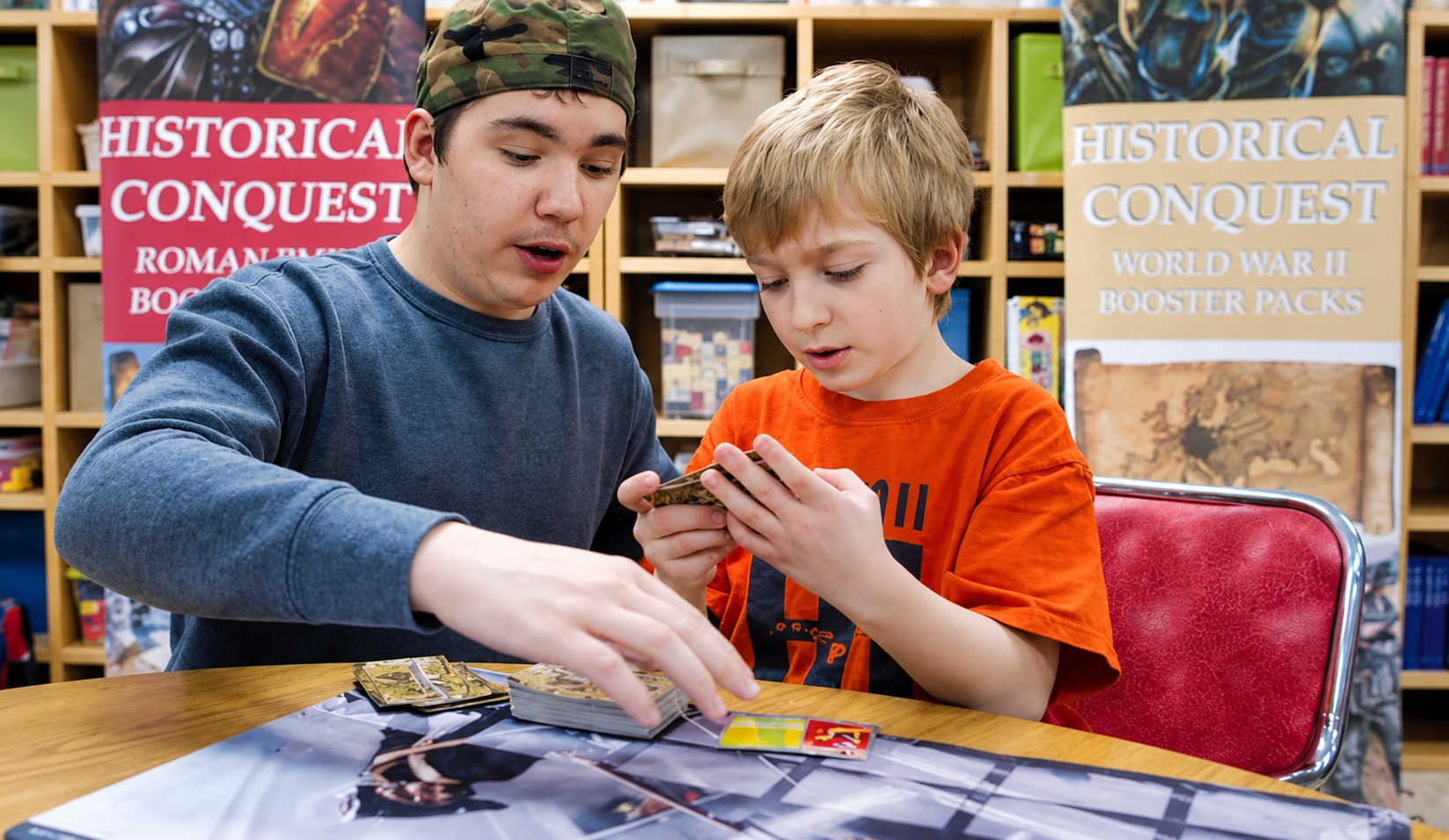
BONUS: Have you ever seen your students play games? You see how their eyes light up? If you really want to test to see if they are getting anything out of a game, let them play - maybe even join them - and then ask them to teach you how to play.
Forget normal games, now use an educational game. Let them play the game by themselves, or play it with them. After you play, ask them what they learned. After they have taught you, then take the time to ask if you can share something more on that topic with them. Then you can add even more learning. If it is somehow about their game, they will be all ears to learn more. Even if they didn’t learn much that time around, they will be ready next time, because they know you will ask and that is where the retention from teaching really kicks in.