The Battle for a Child's Mind
By Xogos Gaming · July 27, 2026
Every Generation Shapes the Next
There has never been a time in history when adults held more power over the minds of children than they do today. We decide what they watch, what they read, what they hear, what they click, and increasingly, what algorithms decide to place before their eyes. The greatest battlefield of the twenty-first century is not fought with tanks or missiles. It is fought for attention. And the prize is the developing mind of a child.
Children are not born with a fully formed worldview. Their brains are under construction. Every experience, every conversation, every success, every disappointment, every game, every friendship, and every hour spent online helps lay another brick in the foundation of who they will become. Adults have always shaped young minds through families, schools, churches, communities, and mentors. Today, however, many adults have quietly handed that responsibility to screens.
Technology itself is not the enemy. The question is whether we are using technology to build young people—or allowing technology to build them for us.
The Remarkable Science of the Developing Brain
Modern neuroscience paints an incredible picture of childhood and adolescence. The human brain is remarkably adaptable, especially during youth. Scientists call this quality neuroplasticity—the brain's ability to strengthen neural pathways based on repeated experiences.
Every time a child practices solving a problem, reading a book, learning history, building something, cooperating with others, or overcoming failure, certain neural connections grow stronger. Those pathways become easier to activate the next time.
The opposite is also true.
Repeated habits of distraction, instant gratification, constant novelty, and endless scrolling can reinforce different patterns of thinking. The brain becomes increasingly efficient at whatever it practices.
That should make every parent stop and think.
The question is not simply whether a child is spending time on a screen. The real question is:
What is that screen training the brain to become?
The Attention Economy Wants One Thing
Most major entertainment platforms have a simple business model. The longer users remain engaged, the more valuable they become.
This has led enormous teams of psychologists, behavioral scientists, designers, and software engineers to optimize products for one primary purpose: increasing engagement.
Bright notifications.
Daily rewards.
Variable rewards that arrive unpredictably.
Endless scrolling.
Constant updates.
Social comparison.
Fear of missing out.
These features are remarkably effective because they take advantage of normal reward systems in the brain. Novel experiences and unpredictable rewards can encourage people to return again and again. While these techniques are not unique to games, they are common across many digital platforms designed to maximize user engagement.
For adults, resisting these systems can be difficult.
For children whose brains are still developing, it is often much harder.
More Than Screen Time
The discussion is often framed around hours spent on devices.
That is only part of the story.
A child who spends an hour collaborating with family on a creative educational game has had a very different experience from one who spends an hour chasing endless cosmetic upgrades, comparing themselves with strangers, or consuming an endless stream of short-form entertainment.
Content matters.
Purpose matters.
Relationships matter.
The developing brain is constantly asking one question:
"What should I become better at?"
Unfortunately, many digital environments answer that question with:
Stay longer.
Buy more.
Watch another.
Become someone else.
That message, repeated thousands of times over years, can slowly influence how young people think about success, identity, and happiness.
Living in a Virtual World Instead of the Real One
Virtual experiences can be wonderful teachers. They can introduce history, science, engineering, art, and teamwork in ways impossible only a generation ago.
But there is also danger when virtual accomplishment begins replacing real accomplishment.
Children still need to solve real problems.
Build real friendships.
Have real conversations.
Experience failure.
Learn patience.
Work toward long-term goals.
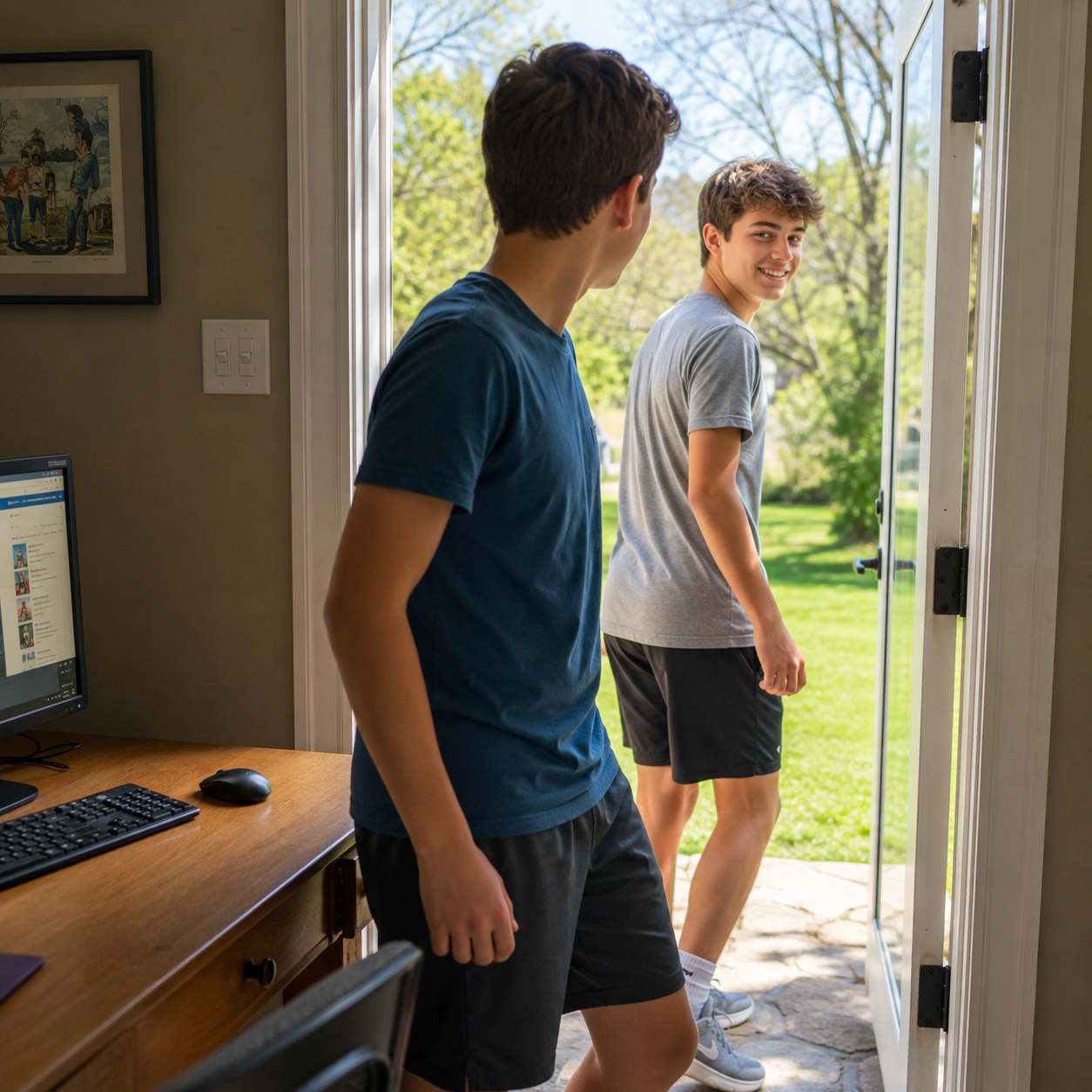
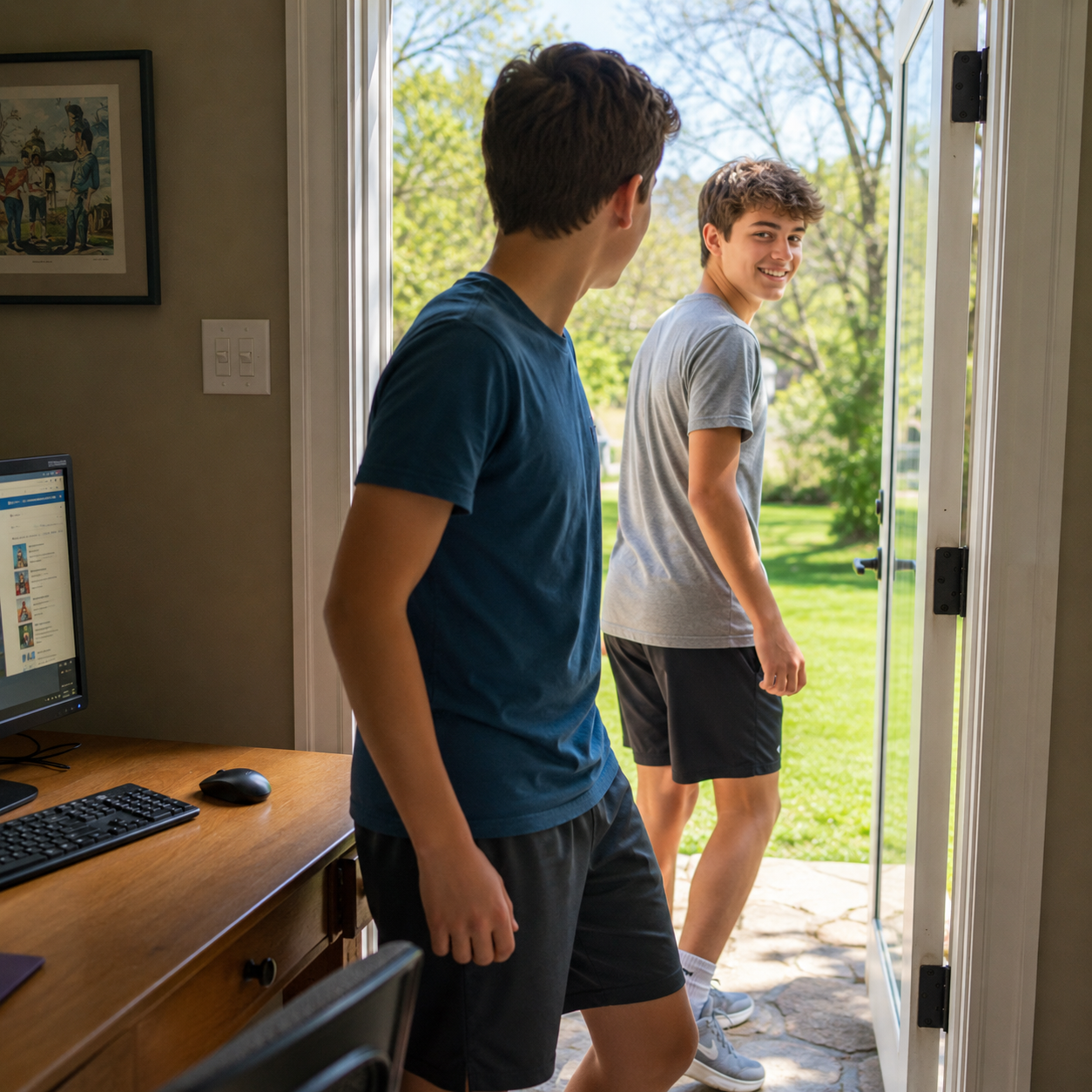
Spend time outdoors.
Discover who they truly are—not simply who earns the most likes or owns the newest digital item.
Healthy development comes from balancing digital experiences with real-world relationships, physical activity, creativity, and meaningful learning.
The goal should never be to escape reality.
The goal should be to prepare young people to thrive in it.
The Pressure to Become Someone Else
Today's students face pressures few previous generations experienced.
Every day they encounter influencers telling them how to dress.
How to look.
How to speak.
How to think.
How to become popular.
How to gain attention.
How to fit in.
Children deserve something different.
They deserve opportunities to discover their own talents rather than constantly comparing themselves with everyone else's highlight reel.
Confidence grows when young people accomplish meaningful things—not when they simply imitate trends.
Why We Created Xogos
That belief became deeply personal for us. As developers and parents, we watched children we loved spend more and more time on popular gaming platforms. At first, it seemed harmless. They laughed, played with friends, and enjoyed exploring virtual worlds. But over time, we noticed changes.
Shorter attention spans. Growing frustration. More emotional ups and downs. Greater difficulty stepping away from the screen. Less excitement about learning outside the game.
These experiences certainly do not describe every child or every gaming platform, but they caused us to ask an important question:
What if games could strengthen young people instead of simply occupying them?
That question became the beginning of Xogos.
Building Something Better
Xogos was never designed to compete by making children spend the maximum amount of time online. It was designed around a different philosophy.
What if every game helped students become more curious? What if history felt like an adventure?
What if science became something they experienced instead of memorized?
What if personal finance became a game where smart decisions actually mattered?
What if families could play together?
What if parents could celebrate growth instead of arguing about screen time?
Those questions shaped every decision we made. The goal was never to remove fun. The goal was to redefine it.
Science Points Us in a Better Direction
Educational psychology has consistently shown that students learn more effectively when they are actively engaged, receive meaningful feedback, and experience appropriate levels of challenge rather than passive instruction alone. Game-based learning research has likewise found that well-designed educational games can increase motivation and support learning when they are closely aligned with educational goals.
That philosophy guides our work.
Our design approach is built around three ideas we continue to evaluate and improve:
First, students are far more likely to choose educational games when those games are genuinely enjoyable and seamlessly integrate learning into engaging gameplay rather than interrupting play with large amounts of instruction.
Second, educational games should help students strengthen academic skills through repeated practice, problem-solving, and curiosity. We continue to measure and refine our platform with that goal in mind.
Third, games can become opportunities for families to learn together. Shared challenges, cooperative play, and meaningful conversations can strengthen relationships when parents participate alongside their children instead of competing with screens for attention.
These are not simply product features.
They are guiding principles behind everything we build.
Let Kids Be Kids Again
Young people already carry enough pressure. They do not need another platform telling them to become someone they are not. They need opportunities to think.
To laugh.
To learn.
To fail safely.
To grow confidently.
To build friendships.
To spend time with their families.
To discover who they were created to become.
Technology will always shape the next generation. The real question is whether we will allow technology to shape children by accident—or whether we will intentionally build technology that helps shape them for the better.
That is the mission of Xogos. Not to replace childhood. To help protect it. Not to encourage children to escape the real world. To prepare them for it. Not to pressure students into becoming the latest trend. But to give them the freedom to become exactly who they were meant to be.