Why Every Student Should Explore the Trades Before Paying for Trade School
By Trade Schooler · July 14, 2026
The Growing Popularity of Trade Schools
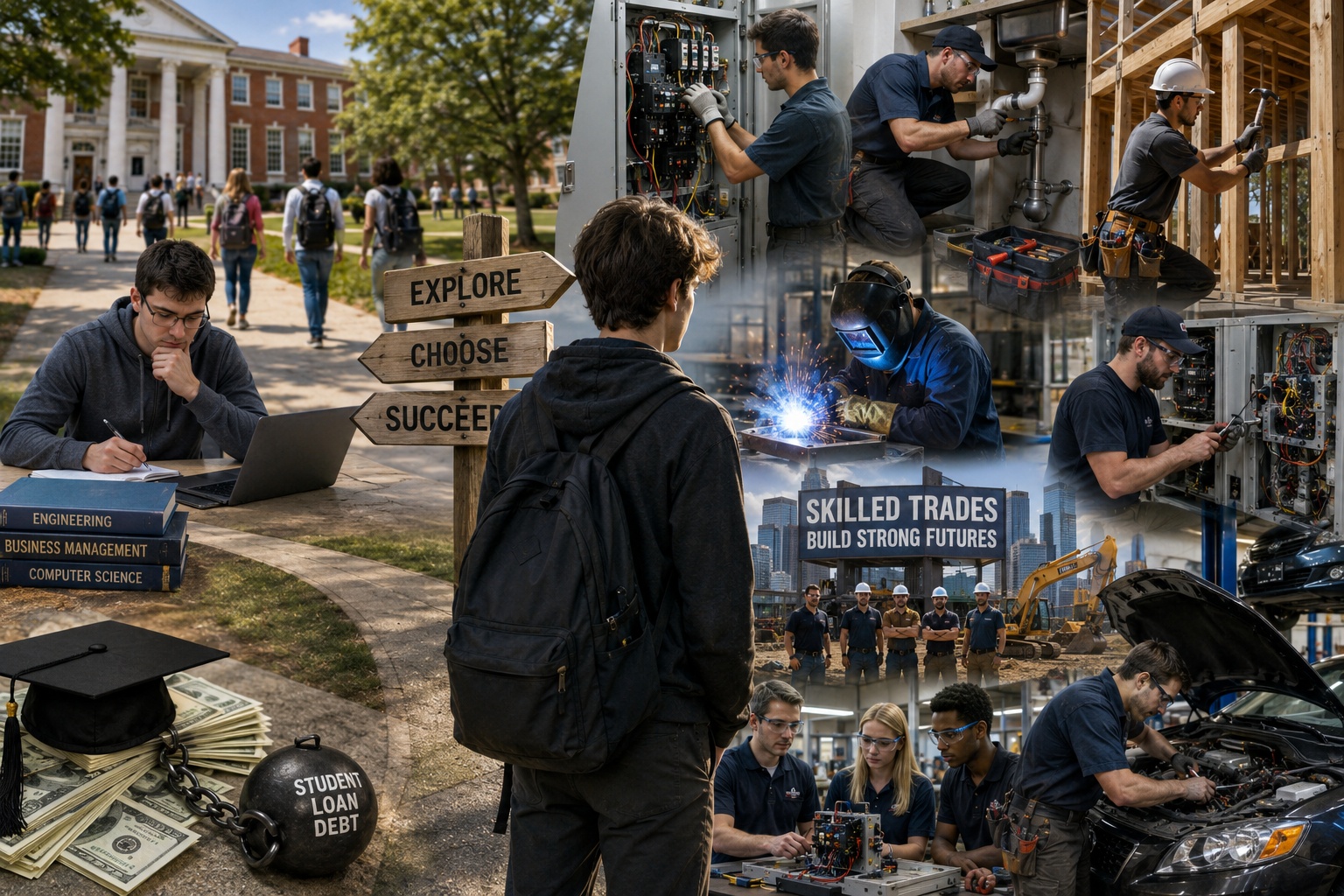
Trade schools have experienced remarkable growth over the past several years. According to the National Student Clearinghouse, vocational and trade-focused public two-year institutions have experienced substantial enrollment increases, with enrollment growing nearly 20% since 2020. Undergraduate certificate programs, many of which prepare students for skilled trades, have also seen significant increases.
Industry researchers expect this trend to continue. A 2025 report from Validated Insights projected that trade school enrollment will grow approximately 6.6% annually through 2030—far faster than overall higher education enrollment, which is expected to grow less than 1% per year.
Several factors are driving this shift:
- Rising university tuition costs
- Growing concern over student loan debt
- High demand for skilled workers
- Faster paths into the workforce
- Strong wages in many skilled trades
- Careers that are less likely to be replaced by artificial intelligence
Today's students are increasingly looking for careers that offer both financial stability and practical skills.
The Income Gap Has Become Smaller
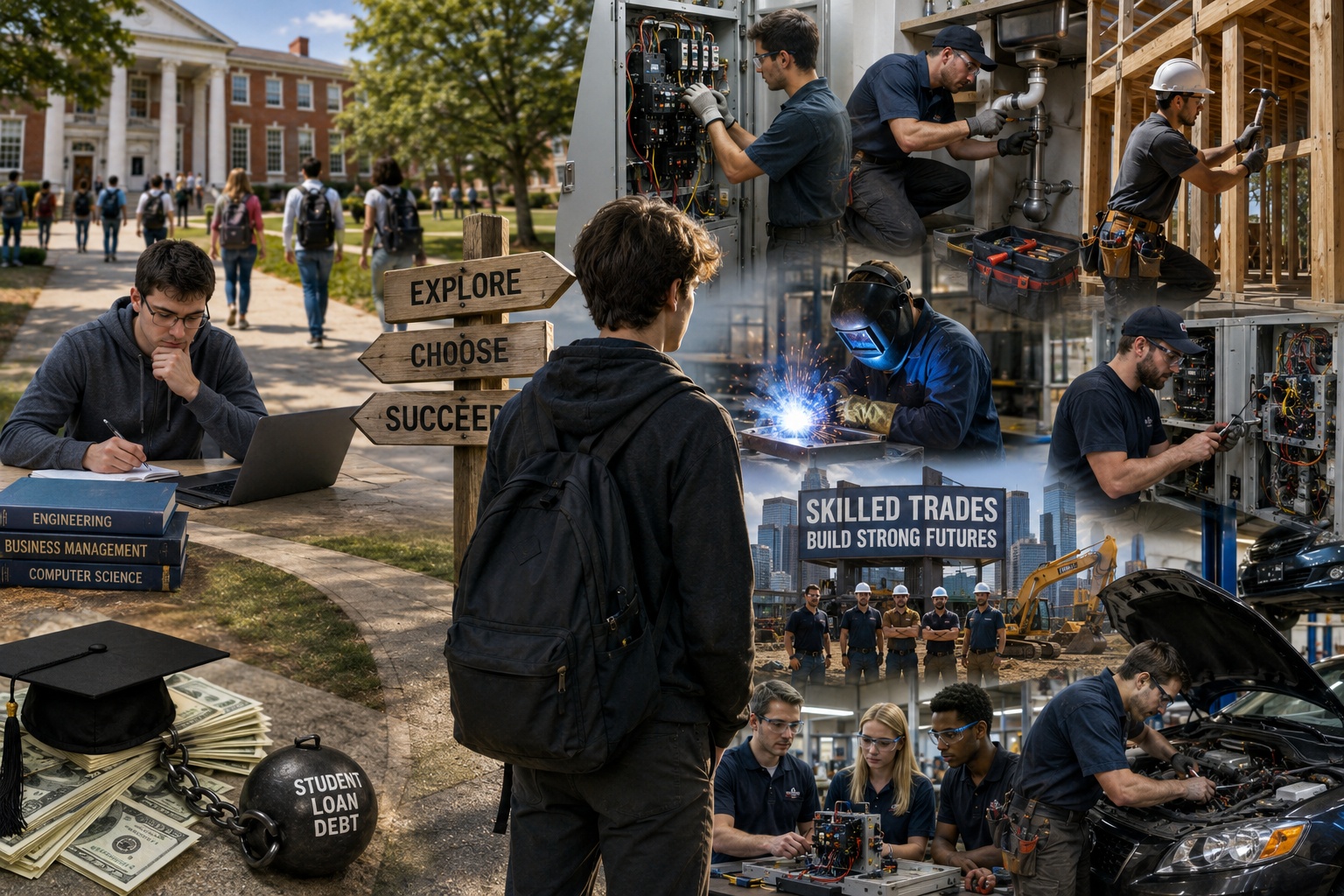
A bachelor's degree still provides higher average lifetime earnings across the economy. However, the difference is becoming smaller in many fields, particularly when students compare trade careers with degrees that offer lower financial returns. Recent economic analyses show that wages for workers without traditional four-year degrees have risen substantially in recent years, narrowing the earnings gap compared with college graduates.
Even more importantly, skilled trades often allow graduates to begin earning years earlier than traditional college students while avoiding significant student debt. Instead of spending four or more years paying tuition, many trade students complete their education in one or two years—or earn money while completing apprenticeships.
Six-Figure Careers Are Possible
One of the biggest misconceptions about the skilled trades is that they offer only modest incomes. While not every trade begins with six-figure salaries, many specialized fields can reach or exceed
Examples include:
- High-voltage electrical lineworkers (linemen)
- Elevator and escalator installers and repairers
- Industrial electricians
- Instrumentation technicians
- Commercial HVAC specialists
- Heavy equipment mechanics
- Power plant operators
- Pipeline welders
- Specialized underwater welders
- Industrial automation technicians
In states such as California, Texas, Alaska, Washington, and North Dakota, experienced professionals in these fields—particularly those working overtime, in union positions, or in specialized industries—can earn well above
However, students should remember that these salaries often come after completing apprenticeships, gaining certifications, working challenging schedules, or acquiring several years of experience. Understanding these realities before choosing a career is essential.
Every Trade Is Different
The skilled trades are incredibly diverse. Someone who enjoys solving electrical problems may not enjoy plumbing. A student fascinated by engines may discover that automotive repair is a better fit than welding. Others may love designing HVAC systems or operating heavy construction equipment.
Before investing in training, students should ask questions such as:
- What does a normal workday look like?
- Will I work indoors or outdoors?
- How physically demanding is the job?
- What certifications are required?
- How much travel is involved?
- What are the long-term advancement opportunities?
- What is the job outlook over the next twenty years?
- What salary can I realistically expect after graduation and after gaining experience?
Knowing these answers beforehand allows students to choose careers that fit both their interests and their lifestyle.
Learning Before Investing
Many students spend thousands of dollars entering programs they later realize are not the right fit. This happens in universities and in trade schools alike.
Imagine discovering halfway through an HVAC program that you dislike working in confined spaces. Or realizing after months in an automotive program that your passion is actually electrical systems. Early exposure could have helped avoid that costly mistake.
Career exploration gives students confidence before making one of the biggest educational investments of their lives.
The Value of Career Exploration
Research consistently shows that students who clearly understand career expectations are more likely to complete their training and remain in their chosen profession. Exploring careers beforehand helps students:
- Make informed educational decisions
- Reduce unnecessary student debt
- Increase motivation during training
- Better understand workplace expectations
- Build confidence before entering the workforce
- Discover careers they may never have previously considered
Career exploration is not about eliminating options—it is about opening doors.
Introducing Trade Academy
That is exactly why we created Trade Academy.
Trade Academy is designed to introduce middle school and high school students to a wide variety of skilled trades before they spend money attending a university, technical college, or trade school.
Through engaging online lessons, interactive activities, career demonstrations, and real-world examples, students will learn the fundamentals of careers including plumbing, HVAC, electrical work, carpentry, welding, automotive technology, heavy equipment, construction management, industrial maintenance, and many more.
Students will discover:
- What each career involves
- The tools professionals use
- Daily responsibilities
- Safety expectations
- Required education and certifications
- Salary ranges
- Career advancement opportunities
- Whether the trade matches their interests and strengths
By the time students finish Trade Academy, they will have a much clearer understanding of the careers they are considering. Instead of guessing which path is right, they can make informed decisions with confidence.
Choosing a career is one of the most important decisions a young person will ever make. Whether that path leads to a university, a trade school, an apprenticeship, or another educational opportunity, students deserve to understand their options before making a financial commitment. Trade Academy helps provide that foundation, giving every student the knowledge they need to begin building a successful future.
More from the marketplace
- A New Way to See: Photography for Your Homeschool Day — 100cameras, October 16, 2026
- Connect institute of excellence! — Connect institute of excellence, October 16, 2026
- Your Child Isn’t Falling Behind as a Person: They May Just Need a Different Way to Learn — JValenciaACTS, October 15, 2026
- Week 2 - Embrace Mistakes as Learning Opportunities — Classroom Ready Ent. Inc., October 15, 2026
- Step Up For Students: A Complete Guide — eligibility, deadlines and spending rules for Florida families
- Find homeschool vendors — tutoring, curriculum, therapy, STEM, arts and enrichment
Loading the full experience… If it does not appear, this article is fully readable above.